
Why high-pressure alarms return every summer
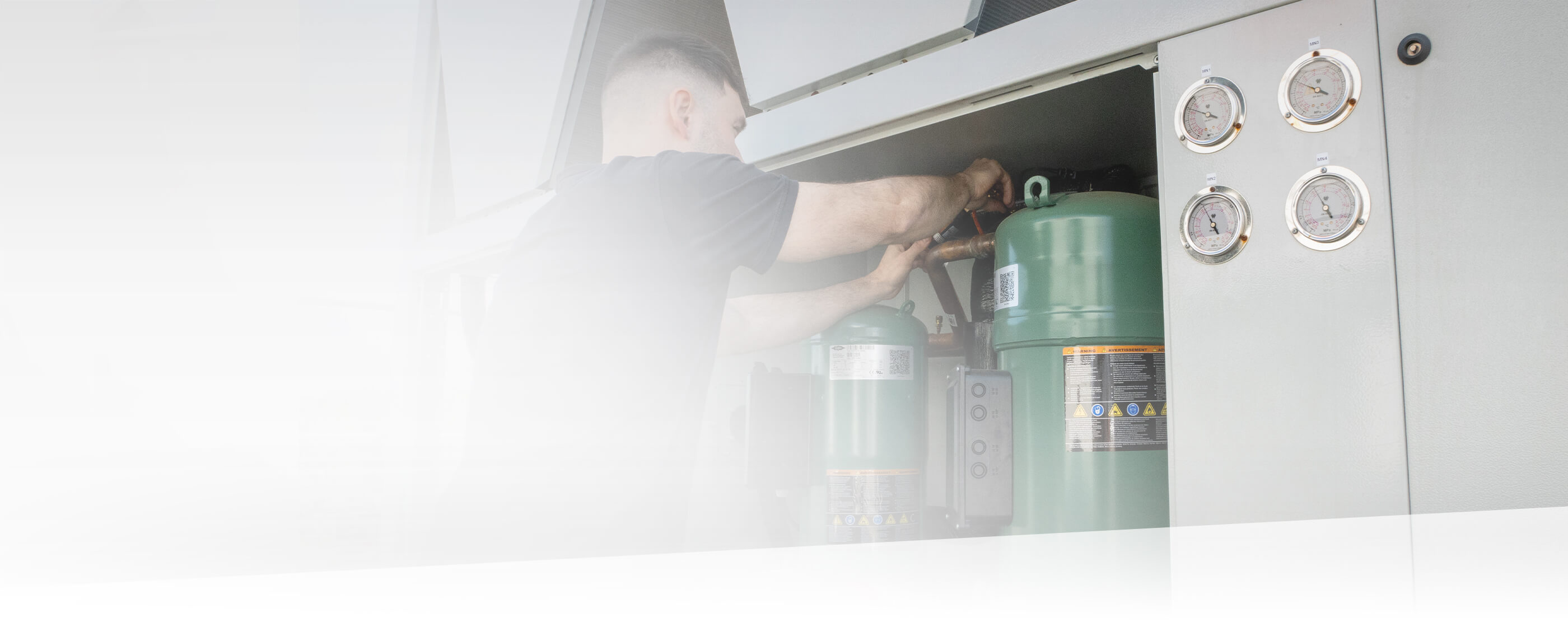
Welcome to our Cooling Practice series. Cooling Practice is a STULZ series about real-world cooling challenges in critical environments. In each article, we look at a common operational issue, what is happening behind it, and the practical routes to improve reliability.
When ambient temperatures rise
High-pressure alarms on DX CRAC units often appear at exactly the wrong moment: during the hottest days of the year, when cooling demand is high, and redundancy is most important.
In many cases, this is not simply a fault. It is a sign that the outdoor condenser is being pushed beyond the conditions for which it was originally selected.
Many existing DX cooling systems in UK data centres were originally selected around a maximum ambient design temperature of 32°C. At the time, that may have been a logical assumption. But UK summers now increasingly push beyond that level, with temperatures above 35°C becoming more common and recent heatwaves reaching 38–40°C in parts of the country. The mechanical plant has not changed, but the conditions around it have.

Why the system trips
In a DX system, the air-cooled condenser must reject heat from the refrigerant to the ambient air. When the ambient temperature rises, the condenser has less temperature difference available to reject the same heat load. As a result, condensing pressure increases, the compressor works harder, and discharge pressure can eventually reach the high-pressure cut-out.
That cut-out is not just a nuisance alarm. It is a safety function. It protects the compressor from excessive pressure, high discharge temperatures and possible mechanical damage. In other words, the alarm is the system telling you that it cannot reject enough heat under the current conditions.
For a live data centre, the impact can be serious. Compressors may cycle off exactly when IT load and cooling demand are at their highest. Repeated trips also place additional stress on the compressor and can reduce the system's reliability over time.
Restoring cooling margin
There is rarely one standard answer for every site. The right route depends on the installation, including condenser type, refrigerant, pipework, available space, water availability, redundancy strategy and future load expectations.
In practice, there are usually two proven engineering routes.
1. Adiabatic pre-cooling on existing outdoor condensers
For sites that need a fast and practical improvement, adiabatic pre-cooling can often be applied to existing outdoor condensers.
By pre-cooling the air entering the condenser coil, the system sees a lower effective air temperature during peak summer conditions. This helps restore the temperature difference the condenser needs to reject heat, reducing the risk of high-pressure alarms without necessarily requiring a full replacement of the outdoor plant.
This route is often well-suited to sites seeking a relatively quick retrofit, especially where water supply and drainage are available near the condensers.
2. Condenser reselection at higher ambient design conditions
Where adiabatic pre-cooling is not suitable, condenser reselection may be the better route.
This can apply where there are water availability limitations, water treatment considerations, site preferences around consumables, or a requirement for a fully mechanical solution. In this case, the existing condenser selection is reviewed and, where required, replaced with a higher-capacity unit based on higher ambient design conditions, such as 38°C or 40°C, rather than on historic design assumptions.
This route is often suited to sites prioritizing long-term design margin, reduced dependence on water, or a broader refresh of aging outdoor plant assets.
Both routes have the same goal: restoring head pressure margin, protecting compressor life and keeping cooling capacity available during the hottest periods of the year.
Look beyond the reset button
If high-pressure alarms recur every summer, it may be time to look beyond the reset button.
STULZ can review existing installations and advise on the most suitable route, from adiabatic pre-cooling to condenser reselection.
